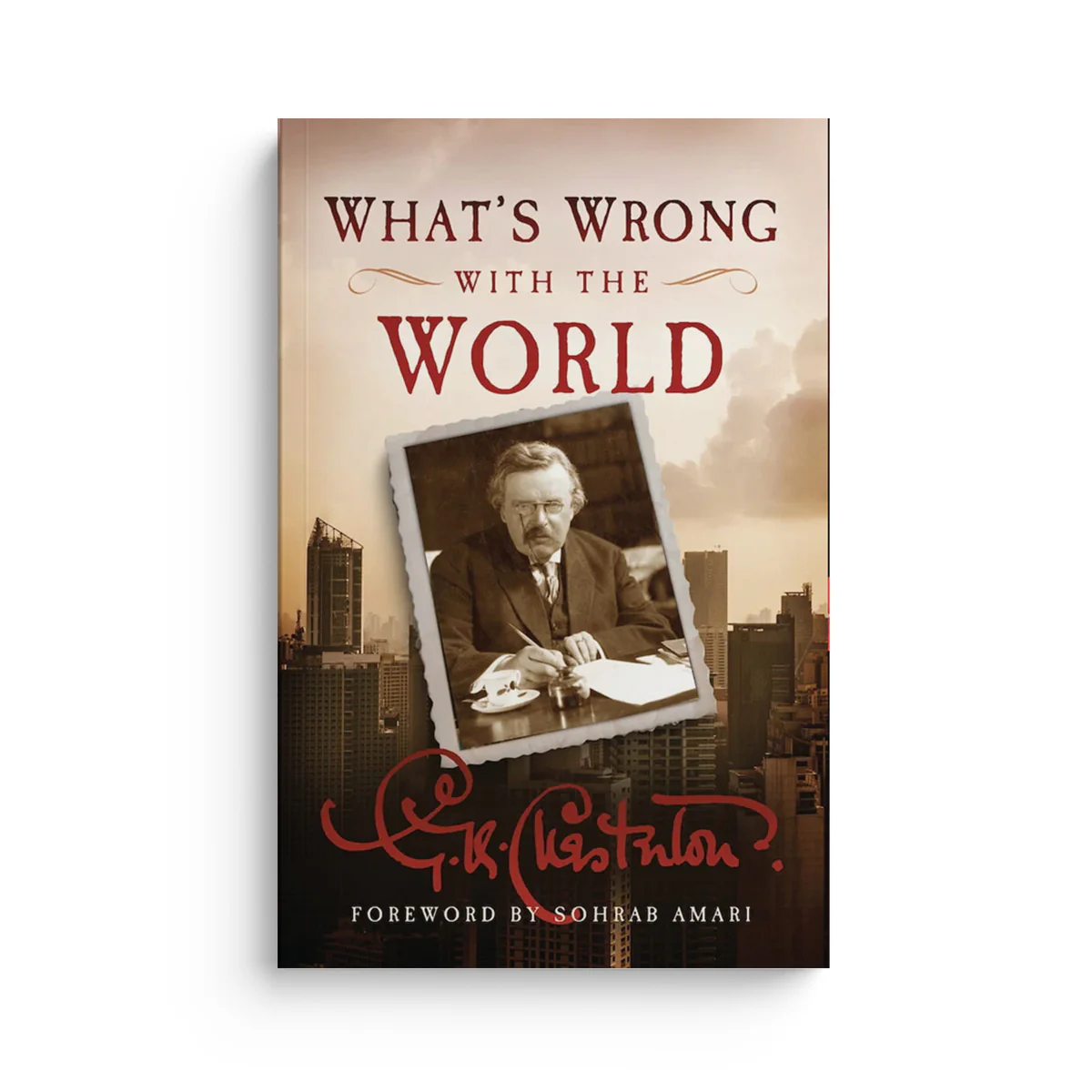
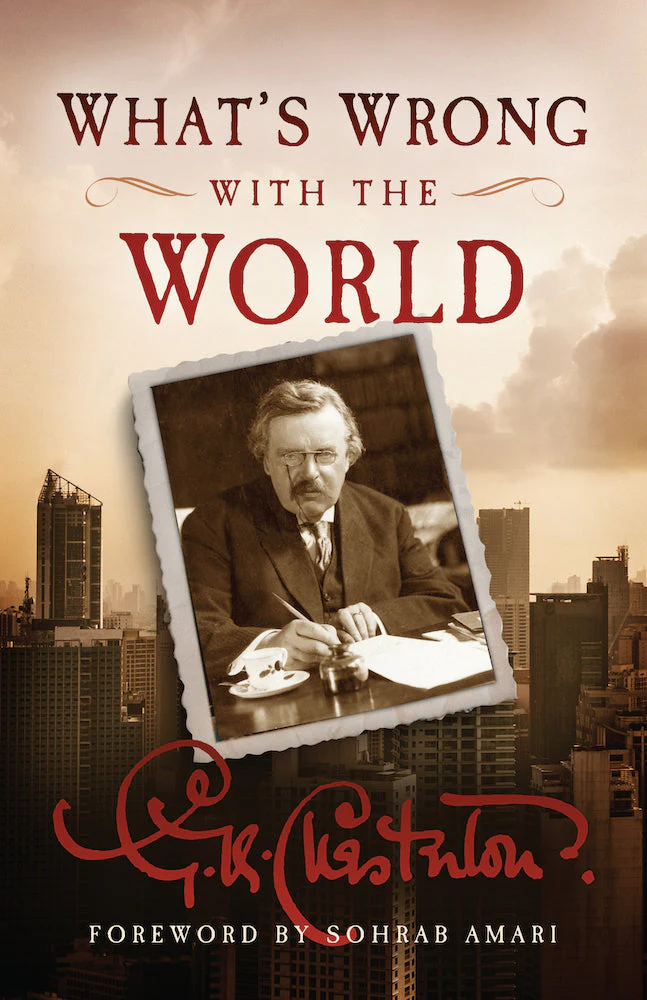
What's Wrong with the World
In 1910, when the industrialists and intelligentsia both promised only “progress,” G. K. Chesterton was among the few in the West who could see the brewing ideological storms that would soon make landfall, not just in the form of world wars and totalitarianism but in the pervasive modern dehumanization that consumes us to this day.
More than a century ago, Chesterton perceived the beginnings of “woke capital” and how it aligns with and promotes social progressivism. There is an unspoken alliance between big business and progressives, he explains. The one (big business) impoverishes the worker, eviscerating the material conditions of family life, while the other (the progressive) tells him he doesn't need family anyway. Big business “wants women workers because they are cheaper,” while the progressive “calls the women's work ‘freedom to live her own life.' ”
Chesterton saw, too, how economic individualism ultimately led to more intrusive government because of the inability of the worker to enter into modest ownership of the kind accessible to his forebears, leaving him vulnerable to looking to the State for help.
It is in examining these threats to a decent, stable, ordinary life that What's Wrong with the World proves astonishingly, almost unbelievably, prophetic. Although Chesterton's conversion to Catholicism was still a decade away, one can see in these pages that his arguments were already unmistakably contoured by Catholic teaching, concerned as he is with the false emphasis on “science,” sexual license as “liberating,” socialism's fake humanity, and how “faith in the future” is actually a sign of cowardice and fear of our past.
As readable today as when it was first written, no other book offers such an incisive analysis of what is truly wrong with our world.
Product Information
Product Information
Shipping & Returns
Shipping & Returns
Description
In 1910, when the industrialists and intelligentsia both promised only “progress,” G. K. Chesterton was among the few in the West who could see the brewing ideological storms that would soon make landfall, not just in the form of world wars and totalitarianism but in the pervasive modern dehumanization that consumes us to this day.
More than a century ago, Chesterton perceived the beginnings of “woke capital” and how it aligns with and promotes social progressivism. There is an unspoken alliance between big business and progressives, he explains. The one (big business) impoverishes the worker, eviscerating the material conditions of family life, while the other (the progressive) tells him he doesn't need family anyway. Big business “wants women workers because they are cheaper,” while the progressive “calls the women's work ‘freedom to live her own life.' ”
Chesterton saw, too, how economic individualism ultimately led to more intrusive government because of the inability of the worker to enter into modest ownership of the kind accessible to his forebears, leaving him vulnerable to looking to the State for help.
It is in examining these threats to a decent, stable, ordinary life that What's Wrong with the World proves astonishingly, almost unbelievably, prophetic. Although Chesterton's conversion to Catholicism was still a decade away, one can see in these pages that his arguments were already unmistakably contoured by Catholic teaching, concerned as he is with the false emphasis on “science,” sexual license as “liberating,” socialism's fake humanity, and how “faith in the future” is actually a sign of cowardice and fear of our past.
As readable today as when it was first written, no other book offers such an incisive analysis of what is truly wrong with our world.